|
|

 |
 |
 |
 |
 |
 |
 |
 |
 |
| Mon., June 8, 2026 |
 |
| Moon Phase: Last Quarter |
|
Next Full: June 29 Next New: June 14 Sunrise: 5:26 a.m. Sunset: 8:24 p.m. |
| More Info |
| Secret to Fluke Success By Mark Marquez II Posted 7/18/08 |
||
|
The fluke size limit has gotten cranked up each year. Inevitably the limit had to surpass the size that could realistically be caught. This year’s 18 inches, the biggest-ever limit, is pushing that mark. Keepers can be had, but anglers have to fish harder. Charter captains can especially have the edge, because they target the flatties year in, year out, all summer long. How do they adjust to the large limit? Do they have secrets? “Basically we do the same things as always,” said Capt. Mick Trzaska from the CRT II, a charter captain from Atlantic Highlands, who fishes the Sandy Hook area, probably the richest fluke grounds in New Jersey. He mostly tries to find the right places for keepers. If one area fails to produce fluke, that’s it. He moves, and moves a lot. Conditions, or winds, currents and tides, are second-most important. Mick always searches for the right combination that creates a moderate drift of the boat for the best fluking. Conditions change day to day, even hour to hour. They’re always different. Flukers cannot expect to park themselves at the same hole every trip and connect. Keep moving, keep searching. Another important aspect is that Mick stays on top of his anglers to make sure they’re feeling the bottom with the rods. If no bottom can be felt, the weight on the rig is increased. Sometimes he’ll bump up the weight to 10 ounces. Mick’s reluctant to fish more than 6 ounces. But the angler must feel the rig gently bouncing along the bottom for the best chances to hook up. |
|
If that means 10 ounces, so be it. If you’re not feeling bottom, don’t ignore it. Attach more weight. In fact, “straight-ahead” fishing is an important part of success. Keep it simple, Mick says. The CRT II’s charters fish for fluke with plain, single-hooked fluke rigs on a three-way swivel with a snap to hold the weight. No skirts, no propellers, no floats, no anything on the hook. Mick watched charters over the years sometimes bring their own rigs with accoutrements. He saw that plain rigs worked best. Many captains, and many experienced anglers, favor plain rigs. After anglers go through the early stages of fishing fancier rigs, they seem to come back to the plain, old rig. They find that nothing works like fresh bait on a hook. Mick ties his own rigs with a 3-foot leader and a 4/0 or 5/0 fluke hook, sometimes a 3/0 early in the season, when the fish are smaller. He uses gold, silver or bronze, but the color doesn’t matter. He uses regular monofilament, like Ande, and not fluorocarbon, for the leader.
The CRT II’s charters drop the rigs to the bottom, let them drift, and mostly leave the rod still. But they’re told to lift the rod slightly, a few inches, every 30 seconds or so. Sometimes a fluke, including big ones, will grab a bait and swim along with it, and the angler won’t know the fish is on. The lift helps catch those fish. When Mick first decides where to begin fishing on a fluke trip, that’s mostly a random choice, based on areas that traditionally gave up bites in the past. Fluke lie flat on the bottom, and can’t be read on the fish finder, so fish-holding bottom structure like holes are targeted on the machine. When fish are hooked, the chart plotter, showing the boat’s previous path, will be used to repeat the drift. Mick’s favorite spots include Terminal Channel, the TC buoy and Bug Light to the Sandy Hook Rips, Flynn’s Knoll, down the beaches off Sandy Hook, including False Hook Channel and off the Nude Beach, and the Shrewsbury Rocks. Various lumps and bumps that Mick’s fished for years are plied from Sandy Hook Point to the Rocks. Mick also favors wrecks. Fluke are predators. They’ll hug bottom along the edges of wrecks and ambush a well-presented bait that drifts past. Fewer but bigger flatties hold there. So these are main, simple ways that one captain bags fluke during the tighter regulations. Not really secrets, but improved attention to what worked in the past. Consider using them yourself. Better yet, consider going with a pro like Mick, if you really want to relax and enjoy a day of fluking, and increase the odds of catching. |
||

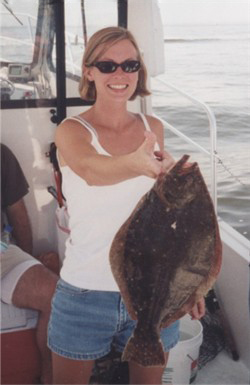 Spearing, killies and squid are the baits. Same old. It works.