|
|

 |
 |
 |
 |
 |
 |
 |
 |
 |
| Mon., June 8, 2026 |
 |
| Moon Phase: Last Quarter |
|
Next Full: June 29 Next New: June 14 Sunrise: 5:26 a.m. Sunset: 8:24 p.m. |
| More Info |
Sharking 101 |
||
|
It’s time. Shark months: He taught shark-fishing seminars this past year, and the following article is a condensed version of a handout that was included with the seminars. Equipment and Supplies Checklist Permits: HMFS permit for tunas and sharks. |
|
Basic Tools: Crimpers, crimps, wire cutters, pliers, haywire-twist tool, rigging wire, rigging needles, balloons or cork floats, snap swivels, barrel swivels, assortment of sharp knives, hook sharpener, pair of leadering gloves and chum bags. Gaffs: Need two. A straight gaff with 6-foot handle and 5-inch hook for smaller sharks and a flying gaff for larger sharks.
Bait: One or two 25-pound flats of mackerel. Two buckets to six buckets of chum per 12 hours of fishing. Amount depends on roughness of seas and water temperatures. Check the forecasts. |
||
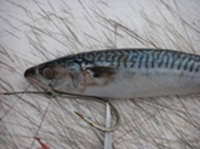
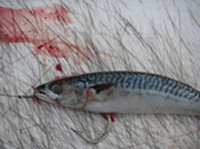
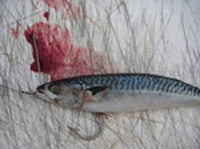
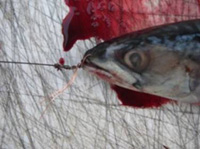
BAIT RIGGING Whole Fish: Place the rigged hook and leader beside the belly of the baitfish to see where to place the hole for the hook. Be sure some of the haywire twist will protrude past the mouth, so the rigging wire can be wrapped around it. Poke a hole in the belly of the fish to push the leader through. Take the loop end of the solid leader and feed it through the hole toward the gill. You might have to hold open the gill to see where it’s pushing through. Continue feeding it through the mouth until the hook shank is inside the fish. Wrap the rigging wire firmly around the haywire twist of the leader, ensuring that the mouth of the fish is closed tight. Now the bait is either ready for the slick or can be coiled up with the leader and placed on ice to keep it fresh. Filleted Baits: Filleted baits are simple to rig. Just hook the bait one time near the wide end of the fillet. Should be hooked from the meat side first and up through the skin. Live Baits: Hooking live baits can be done a few different ways. Can hook through the mouth, the back of the head or even the tail. Through the back of the head is most common. Depends on the type of presentation you’re trying for. Mackerel, bluefish, bunker and tuna carcasses are some of the best. Just remember there are regulations on cutting up certain fish at sea. Be sure to read the laws. |
    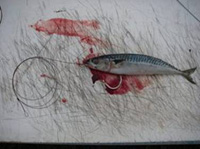 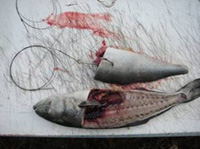 |
|
ROD RIGGING Should keep in mind the type of fish you’re targeting. Sharks have very tough and abrasive skin that can chaff and eventually break mono. Always use this rule of thumb: Use enough leader to cover 1 ½ half times the length of fish that might be encountered. I use two types of leaders in conjunction. A 49-strand wire is tied to the mono with a barrel swivel. A heavy duty barrel snap swivel is tied to the other end of the 49-strand. A solid wire leader about the same length as the 49-strand is connected to the 49-strand with a loop placed on the snap swivel, and a hook is tied on the solid wire.
On arrival where you want to fish, first get the chum in the water, and start putting out the rods. Use only the number of rods that your boat can handle. We use four rods, assuring that the lines won’t constantly tangle. Stagger the lines from in close to 75 yards out. Place the baits at different depths by attaching a balloon or croak float to the line with a rubber band. Use trial and error on the depths, and it does vary from trip to trip, depending on the water temperatures and clarity. Once the lines are in the water, make sure the lever drags are pulled back in free spool and the clicker is on. Be sure to check the baits often, making sure no bluefish have
The rods are in the water, and everyone is waiting for the bite. One of the reels screams! Quickly grab the rod, point it straight at the fish, let the shark run line for a short moment, a 10 or 15 count. Then set the drag, and start to reel in, still pointing at the fish. When you get tension, pull back hard, and set the hook a few times to ensure a good hook set. Remember not to give the fish slack between hook sets. Now start the fight. But if the hit was missed, stop immediately, and open the drag. Sharks usually come right back if the bait is still there. Give it a minute. If it doesn’t come back, check the bait. But now you’re hooked up. Fight the fish to the boat, and remember not to give slack. Once the shark is boat-side, determine what type of shark it is, whether it’s legal size, and whether you want to keep it. Once you know you’re going to take the fish, get ready to gaff it. Make a quick decision on what gaff to use.
Once the shark is gaffed, you either need to stick it with a knife behind the head before the gills, or shoot it with a gun in the same place. The shark should be hung for a while to make sure it’s dead. After it hangs, bring it on board, and pack it with ice to keep it fresh. On the way in, be sure to fly the shark flag to show you had a great day on the water. |
||
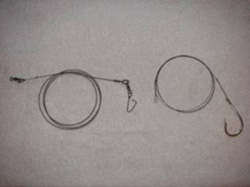 Leader: Two leaders needed:
 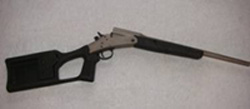 Gun: 410-gauge shotgun with slugs is recommended. Harrington and Richardson Tamer SB1410 single barrel is a great choice.
 SETTING UP THE BOAT DRIFT
 WHEN THE SHARK HITS
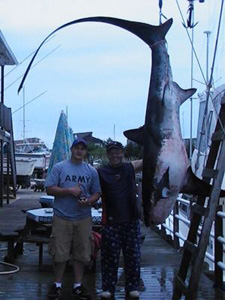 Now, gaff placement is critical. I recommend aiming for the gills, vital organs. That will stop the shark quick.