|
|

 |
 |
 |
 |
 |
 |
 |
 |
 |
| Tue., June 9, 2026 |
 |
| Moon Phase: Last Quarter |
|
Next Full: June 29 Next New: June 14 Sunrise: 5:25 a.m. Sunset: 8:25 p.m. |
| More Info |
| Biggest Fish Prints | |
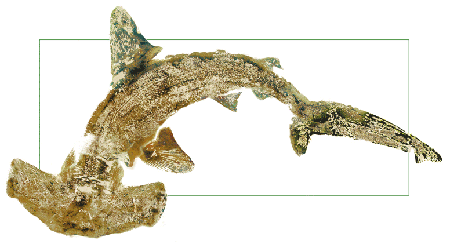
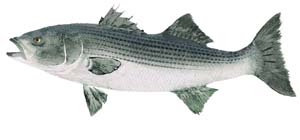
But in these days of threatened fish populations, the art faces criticism, because a fish is killed to make each fish-rubbing. The Japanese first developed Gyotaku in the 1800s, covering a catch with black ink, laying rice paper on top and rubbing the paper to capture a print. Fish-rubbing evolved since then, and artists started printing with
But he also knew the concerns from art buyers whom he found reluctant to obtain pieces that potentially killed too many fish. He developed a solution that he called Textureprinting. With Texturprinting, one fish is rubbed, and then the fish-rubbing is duplicated in fine art prints in either giclee with ink jets or lithographs from plates. Both giclee and lithographics are created from digital photos to capture an image of the fish-rubbing in detail.
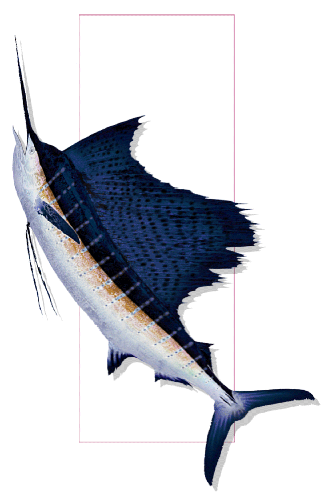
Fish-rubbings of large game were rare because of the difficulty of printing the size and extra contours. Santry traveled to Costa Rica in 2002 for the purpose of printing a large sailfish. Within an hour of fishing, a 10-1/2-footer was boated. Back at the dock that night, he began printing the massive fish. The locals watched this stranger painting a sailfish black in the middle of the night. When he returned home to the United States with the rubbing, he developed an 8-1/2-foot Textureprint of the sail. This one was made from silk-screening, the only silk-screen Textureprint he's ever done. Biggest Fish Prints now creates Textureprints of big gamefish but also many types of fish with this unique art form. For more information, including how to purchase the art, |
 Regan Santry from Biggest Fish Prints,
  But there’s more to