|
|

 |
 |
 |
 |
 |
 |
 |
 |
 |
| Mon., June 8, 2026 |
 |
| Moon Phase: Last Quarter |
|
Next Full: June 29 Next New: June 14 Sunrise: 5:26 a.m. Sunset: 8:24 p.m. |
| More Info |
page 1 of 2 |
||
| The Salmon River By Mark Marquez II |
||
|
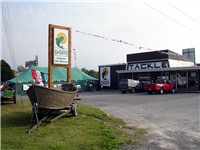
Like the fish returning to the river The fall run of Chinooks and “I know more anglers from (New Jersey) than anywhere,” said Capt. Jim Dence, who owns All Seasons Sports in Pulaski, N.Y. The river, flowing through Pulaski, is so popular that a drive along its banks in the fall can almost look like you never left home, with Jersey plates plastering many other vehicles. The river holds the highest density of salmon in the Northeast, thus offering the best chances to catch them. If you’ve never gone, you might want to consider this fairly short trip, only a 6-hour drive from New Jersey, to a world-class fishery. |
|
The salmon—native fish of the Pacific Ocean that are stocked from a hatchery on the upper river at the village of Altmar—are born along the river and migrate to Lake Ontario, where they grow to adulthood after about three or four years. Then they return to the river to spawn, staging in the lake at the mouth of the river in August. Next they head upstream. The action on the river usually begins with a blast of cohos, 6- to 15-pounders, that shoot upstream in the beginning of September. The cohos, less numerous, smaller and some think better-tasting with pinker flesh, than the Chinooks, are soon followed by their larger cousins. If you hit the river at the right time, and that depends on the time of year and the water level, the waters will be loaded with the fish. Timing is the key to the fishing, Dence said. Anglers should watch the water flow through various sources, including All Season’s web site. The other major factor is to know where the fish are located the most during a given time. Again, the shop’s web site and other sources, including online, will give frequent reports about the location of the fish.
One-and-a-half-gates or more—1,125 CFS or greater—causes high water and a very strong flow. These conditions make fishing difficult or impossible, because they leave few areas along the bank to fish from. The high water covers the banks, pushes the river up against the trees and cliffs, and creates too strong of a current to wade. The river is strong, except during very low water, and this makes it dangerous to fish to begin with. People drown, so do be careful. Dence recommends hiring a guide for your first trip. He says the money you spend saves the cost of three trips that it would take you to learn what can be learned about the fishing from a guide. He suggests finding a guide by contacting a tackle shop, especially All Seasons. He says a shop will know the important considerations and info, such as what type of fishing the guide does, how many people can be accommodated and what types of equipment are needed. But you can go on your own, and some basic things should be known. |
||
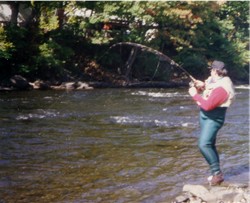 Dence explained that September and October are the peak months to fish for the salmon as they push up the river.
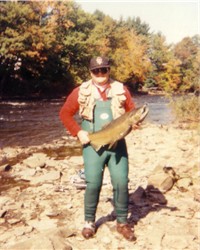 If anglers can be flexible and take a trip at the spur of the moment, whenever the fishing turns on best, that’s ideal, Dence said. Otherwise if a trip must be planned ahead of time, then you’re stuck with whatever conditions take place.
